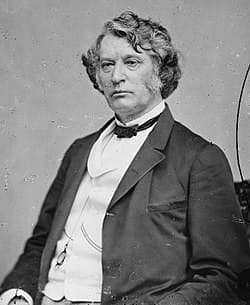
The American party system had been dominated by Whigs and Democrats for decades leading up to the Civil War. But the Whig party's increasing internal divisions had made it a party of strange bedfellows by the 1850s. An ascendant anti-slavery wing clashed with a traditionalist and increasingly pro-slavery southern wing. These divisions came to a head in the 1852 election, where Whig candidate
Winfield Scott was trounced by
Franklin Pierce. Southern Whigs, who had supported the prior Whig president Zachary Taylor, had been burned by Taylor and were unwilling to support another Whig. Taylor, who despite being a slaveowner, had proved notably anti-slavery despite campaigning neutrally on the issue. With the loss of Southern Whig support, and the loss of votes in the North to the
Free Soil Party, Whigs seemed doomed. So they were, as they would never again contest a presidential election.