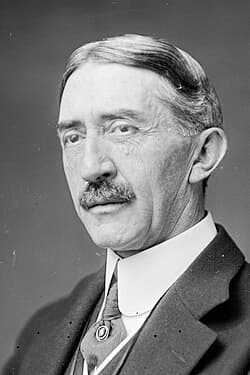
Jefferson had originally decided the University of Virginia would have no serving president. Rather, this power was to be shared by a rector and the
Board of Visitors. But as the 19th century waned, it became obvious this cumbersome arrangement was incapable of adequately handling the many administrative and fundraising tasks of the growing university.
Edwin Alderman, who had only recently moved from his post as president of
UNC-Chapel Hill since 1896 to become president of
Tulane University in 1900, accepted an offer as president of the University of Virginia in 1904. His appointment was not without controversy, and national media such as
Popular Science lamented the end of one of the things that made UVA unique among universities.